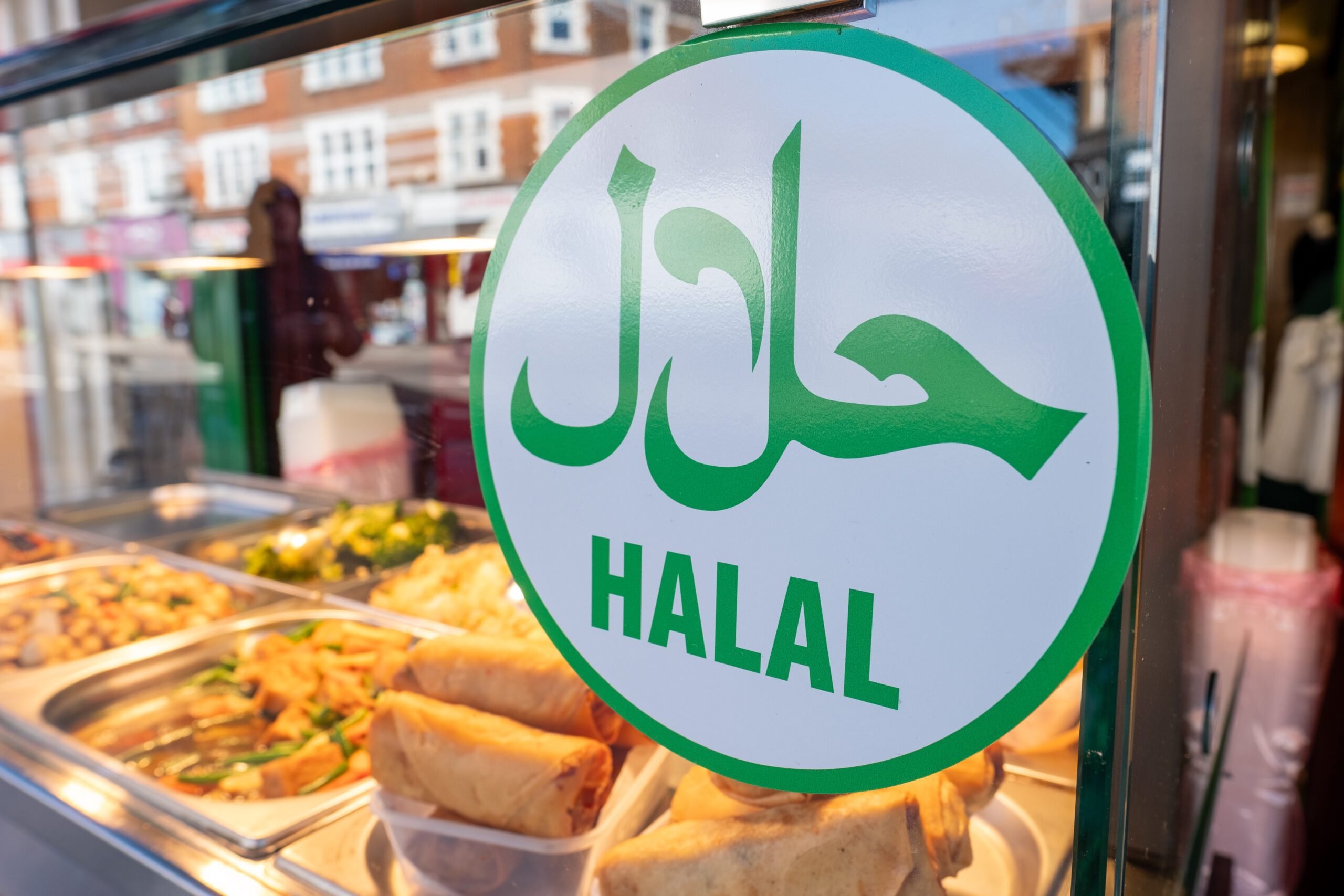
Zabihah vs. Halal: Is “Halal” Not Enough?
Dofactora Iskandar
Article
December 4, 2025
In the discussion of Muslim dietary practices, few terms spark as much debate as halal and zabihah. While both are rooted in Arabic, their meanings and usage have evolved differently over time—especially in North America. In fact,
“it is mainly in the United States and Canada where the two words are commonly used side by side to describe meat.”
This distinction, however, goes beyond language; it reflects the broader challenge of interpreting centuries-old religious principles within the modern food industry.
From Words to Practice
The word halal literally means “permissible” or “lawful.” It applies to food, drink, behavior, and almost every aspect of life. For meat, Islamic texts provide clear requirements, making it an obligation for Muslims to ensure that what they consume is halal.
By contrast, zabihah simply means “slaughtered.” Historically, in Muslim-majority societies, slaughter was naturally carried out according to Islamic rules, so the term zabihah became closely associated with halal meat. But the word itself does not inherently mean “halal slaughter.” It merely denotes that an animal has been killed by cutting the throat of the animal.
The North American Meaning
In the U.S. and Canada, zabihah has taken on a more specific and stricter definition. Within many communities, it refers to the meat of animals that are:
This usage developed as a way for Muslims to safeguard their dietary integrity in environments where halal oversight was limited. It provided reassurance that the meat they consumed was unquestionably compliant. However, it also narrowed the meaning of zabihah, making it appear as the only true form of halal, while other valid interpretations were overlooked.
Halal in a Globalized Food Industry
As food production became more industrialized, global halal certification standards emerged to reconcile religious principles with modern practices. These standards often highlight the diversity of Islamic interpretation:
These differences are not contradictions but rather reflections of the flexibility within Islamic jurisprudence, shaped by culture, context, and modern realities.
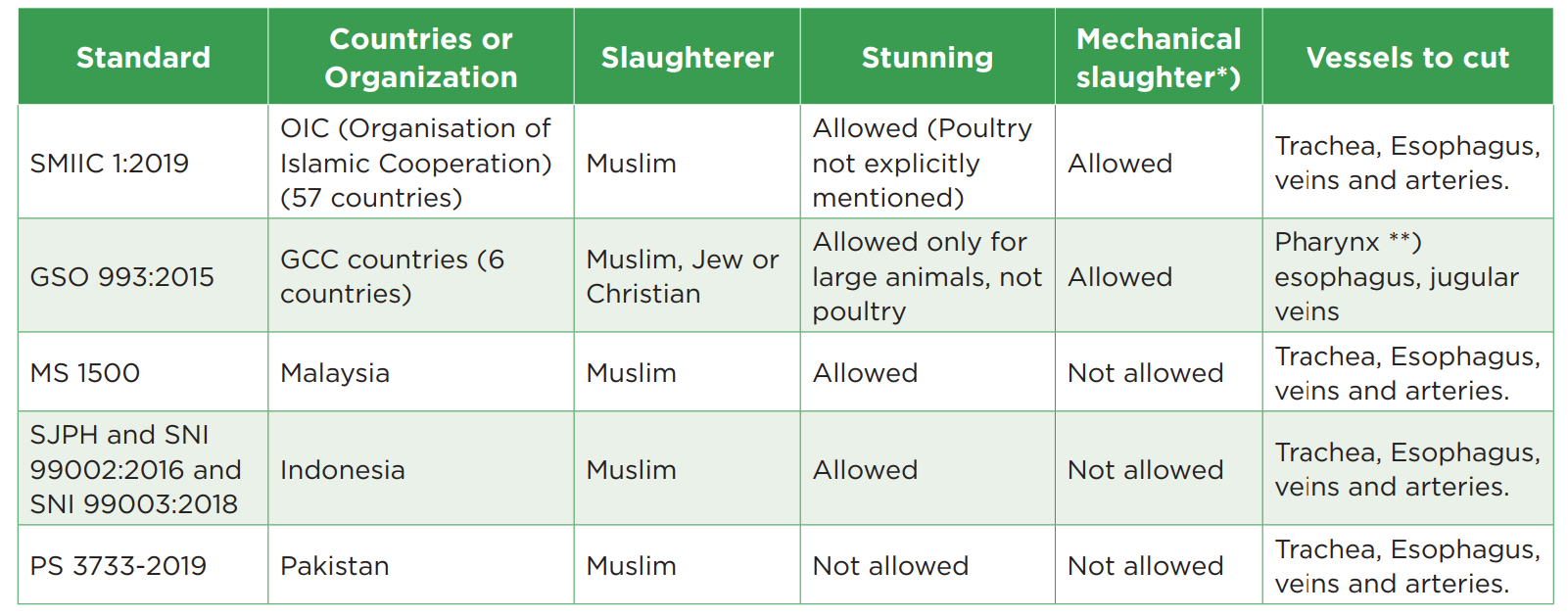
*) applies mainly to poultry.
**)In the GSO 993:2015 standard, the Arabic text uses “القصبة الهوائية” (al-qasaba al-hawāʾiya), meaning “trachea,” though the English version translates it as “pharynx.”
In all cases, the operator activating the machine must recite the tasmiyyah (invocation of God’s name). Stunning, where permitted, is strictly regulated to ensure the animal is rendered only unconscious—not dead—before slaughter.
The Source of Confusion
In North America, these global variations often lead to confusion. A product labeled zabihah halal may, for instance, come from a machine-slaughter process that does not align with the community’s traditional expectation of “zabihah.” One real example is found in Canada, where a halal-certified product is marketed as “Zabihah meat” but is produced through mechanical slaughter. This illustrates the ongoing tension between local community perceptions and the broader interpretations reflected in international halal standards—tensions that continue to fuel debates around halal meat.
In kosher production, only about 30% of the meat qualifies as kosher, while the remaining portion, known as heif, not accepted under kosher standards, is sometimes sold under halal labeling. However, kosher slaughter does not meet all halal requirements, and unless the meat has proper halal certification, labeling it as halal may be misleading.
Faith, Choice, and Respect
“For many Muslims, insisting on zabihah reflects a strong spiritual conviction—a desire for the highest level of assurance.”
For others, certified halal meat, even if produced with stunning or mechanical slaughter, is fully acceptable. Both perspectives represent sincere efforts to live according to faith.
What matters most is knowledge. By understanding how different halal standards work, Muslims can make informed choices that align with their beliefs. Equally important is the willingness to respect differences within the community. Diversity in practice should not divide, but rather enrich, Muslim life in a globalized world.
Conclusion
The question is not whether halal is “enough” to be halal. Instead, it is about recognizing the breadth of valid interpretations and navigating them with clarity and compassion. Whether one follows a stricter view of zabihah or relies on internationally recognized halal standards, both paths are rooted in the same goal: to honor faith through what we consume.
In the end, halal is not just a label—it is a commitment. And understanding its diversity is key to strengthening, not fragmenting, the global Muslim community.
References
Dofactora Iskandar is a Halal industry professional with a Master of Food Science (MFS) from Cornell University. Leveraging his scientific background, Dofactora has worked as a Halal auditor and trainer for the past eight years.