
US Halal Academy: Making Halal Training Inclusive Across America
Dofactora Iskandar
Article
March 31, 2026
Dofactora Iskandar
 In the United States, the Halal-certified market is growing fast. Around the world, according to the State of Global Islamic Economy Report 2025 by DinarStandard, spending in key Halal sectors—food, cosmetics, pharmaceuticals, travel and more—reached US $2.43 trillion in 2023, and is projected to rise to US $3.36 trillion by 2028.
To take full advantage of this growth, U.S. manufacturers need access to clear, trusted Halal guidance. That means working with professionals who understand both the religious basis of Halal and the technical matters. Halal guidance requires both a sound understanding of Islamic principles and the technical expertise to apply them effectively in modern production environments.
How It All Began
The US Halal Academy (USHA) was established in 2019 as a subsidiary of the Islamic Food and Nutrition Council of America (IFANCA®) to strengthen education for both communities and industries. The vision started more than 40 years ago, when IFANCA® was founded to guide the Muslim community in identifying and choosing Halal alternatives for everyday needs. Over the decades, IFANCA® has grown into one of the world’s most respected Halal certification bodies.
To extend its educational mission, IFANCA® launched the US Halal Academy as a dedicated training and learning platform, while IFANCA® continues its role as the certifier. Since its establishment, USHA has helped more than 50 companies understand Halal certification and its practical implementation.
What Makes USHA Different
USHA adopts an inclusive and structured approach to delivering faith-based standards to diverse industry audiences. USHA translates religious principles into an inclusive, industry-friendly framework. The Academy focuses on helping companies meet Halal requirements in a pragmatic and structured way — allowing them to concentrate on compliance without compromising their operational quality or integrity.
USHA ensures that education, monitoring, and Halal implementation remain practical and reliable. In essence, USHA helps industries understand that Halal is not an exclusive or limiting concept; rather, it enhances product quality, marketability, and consumer trust. USHA encourages companies to recognize the opportunity to access the Halal market by aligning their management systems with a practical, industry-focused approach.
USHA Training Programs
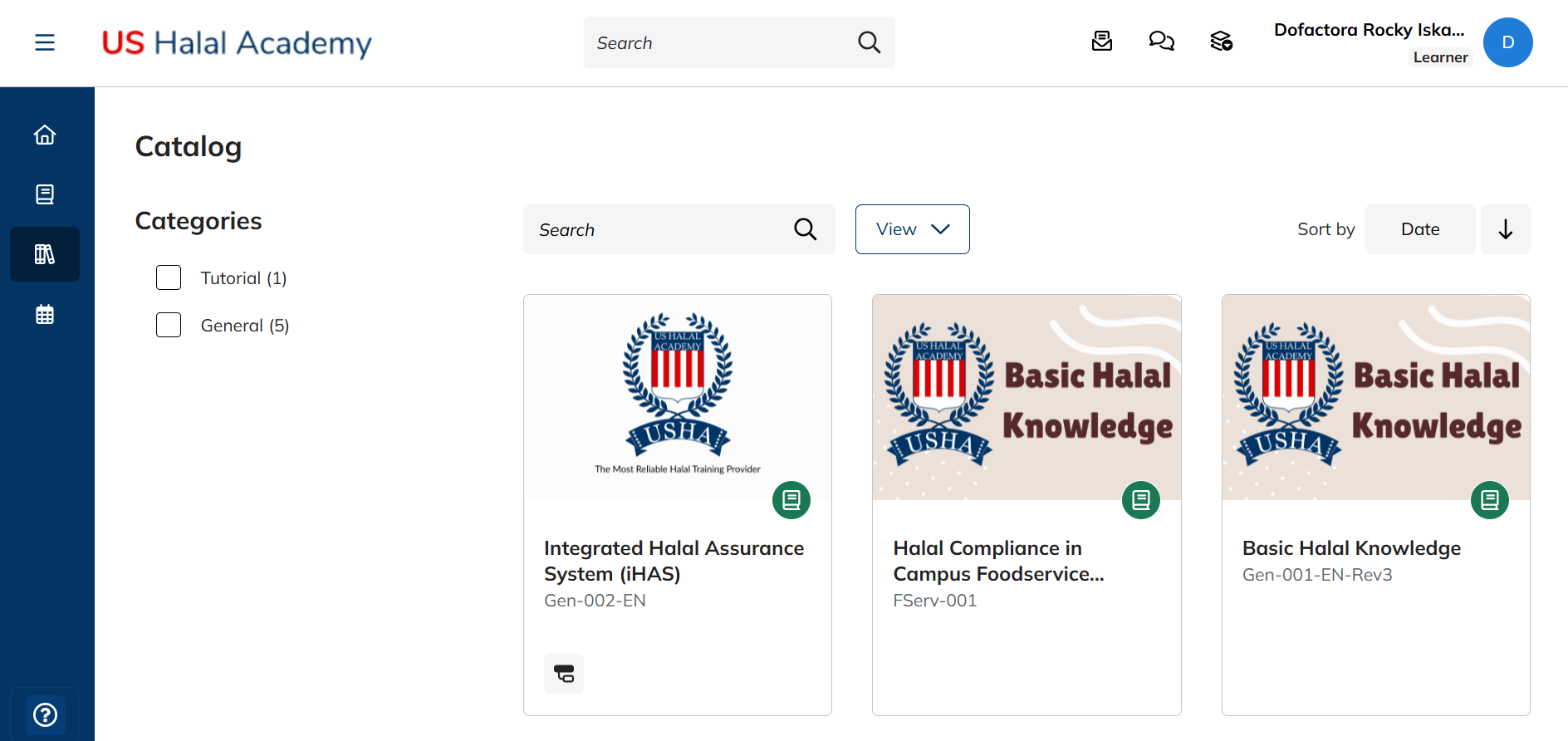
USHA’s primary focus is industry training, delivered through three flexible formats available throughout the year:
1. Regular Training
This program is open to participants from various industries seeking general Halal knowledge. In 2026, USHA planned to hold four regular sessions — in April, July, September, and December.
Because participants come from diverse sectors, discussions often span multiple perspectives. A food manufacturer, for example, might learn about issues faced by the cosmetics industry, and vice versa. These sessions also offer valuable networking opportunities, as participants may discover potential suppliers or clients within the group.
2. In-House Training
Designed for organizations seeking tailored learning experiences, in-house training focuses on company-specific challenges and practical solutions. This format is ideal for companies enrolling five or more participants, or for business groups managing multiple facilities. The schedule is arranged flexibly based on mutual availability between USHA and the company, ensuring an efficient and focused session.
3. Self-Learning Training
Launched earlier this year, the self-learning program allows participants to complete training at their own pace — anytime, anywhere. It’s designed for busy professionals who may not have the flexibility to join live sessions.
Although it’s self-paced, participants can still engage in discussions with instructors through the USHA Training Portal to clarify questions or share insights from the modules.
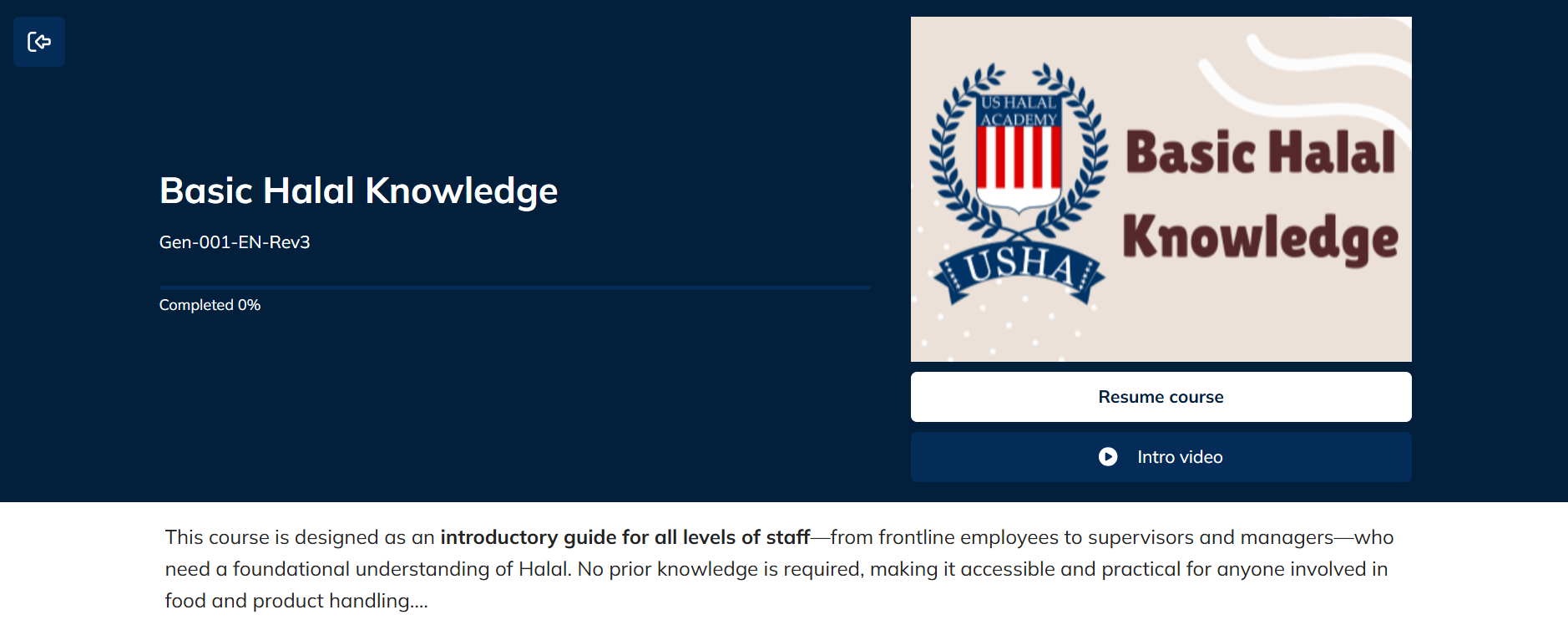
All USHA programs are conducted virtually, making them accessible, efficient, and cost-effective for global participants.
Serving All Communities
While USHA’s primary audience is the industry sector, its broader vision is to become the world’s most trusted and inclusive provider of Halal education.
USHA is committed to advancing a globally trusted, inclusive understanding of Halal—serving industries, institutions, and individuals alike. Its mission is to bridge knowledge gaps, strengthen compliance frameworks, and support a more transparent and reliable global Halal ecosystem.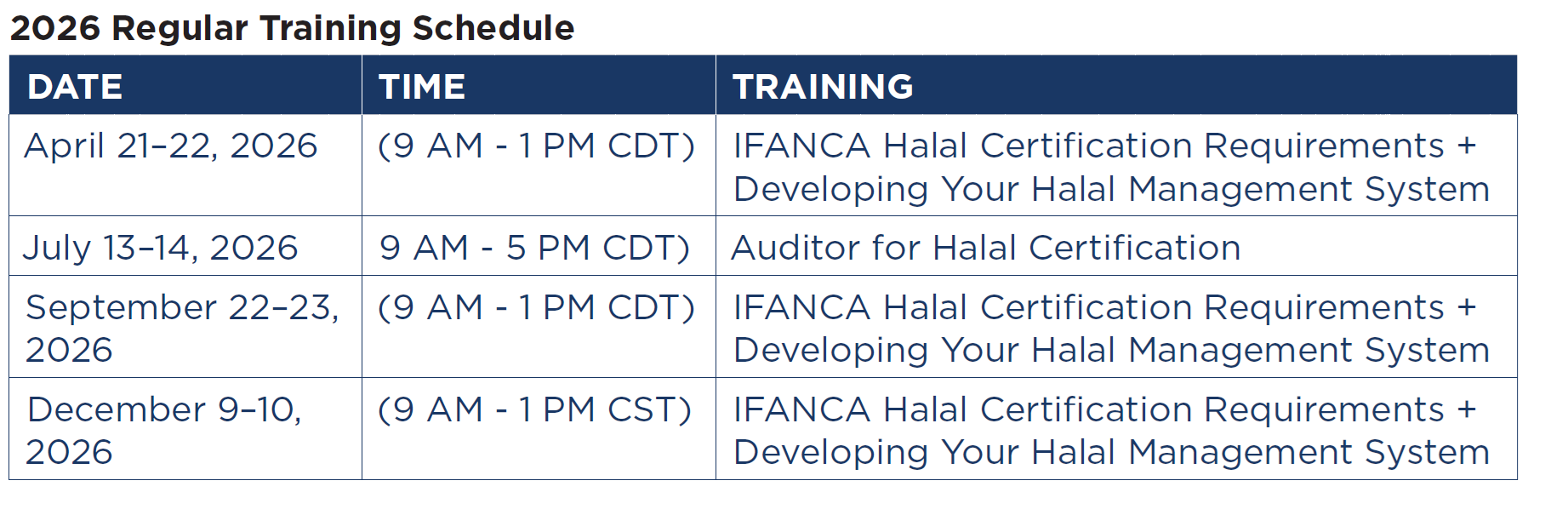 Connect with us today!
Email: info@ushalalacademy.org
Website: www.ushalalacademy.org
LinkedIn: https://www.linkedin.com/company/us-halal-academy/
The US Halal Academy (USHA) is a subsidiary of the Islamic Food and Nutrition Council of America (IFANCA®), established to provide technical Halal training programs for industry professionals and Halal enthusiasts.
 Dofactora Iskandar is a Halal industry professional with a Master of Food Science (MFS) from Cornell University. Leveraging his scientific background, Dofactora has worked as a Halal auditor and trainer for the past eight years.