
Education, Community, and Cultural Outreach: How IFANCA’s Initiatives Serve Our Communities
Briana Mariam Thomas
Article
March 31, 2026
Briana Mariam Thomas
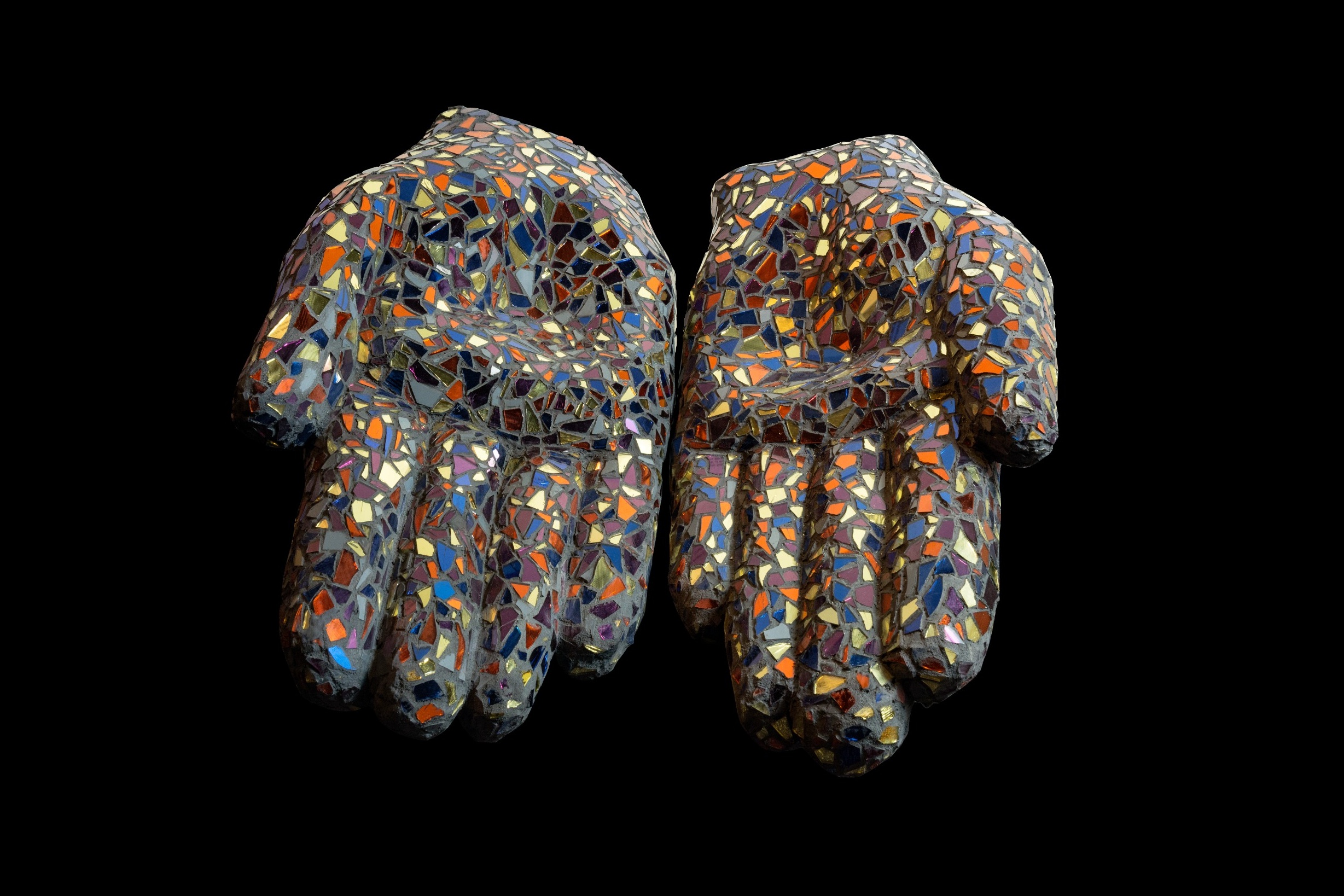
Across the Chicagoland area, two IFANCA® initiatives—the Abrahamic Center for Cultural Education (ACCE) and the Sabeel Center for Community Development—demonstrate how Islamic education, cultural literacy, and community empowerment can take root in local neighborhoods. Built from scratch to serve distinct areas of need, both centers approach education and outreach differently, yet share a common ethos: creative service, accessible learning, and a commitment to meeting communities where they are.
The Abrahamic Center for Cultural Education (ACCE)
The Abrahamic Center for Cultural Education (ACCE), located in downtown Chicago, is an Islamic art gallery and resource center initiated by IFANCA®. Dedicated to creatively educating the community on Islam and Muslims, ACCE preserves diverse histories and stories through exhibitions, workshops, and academic partnerships. It collaborates with individuals, universities, schools, religious organizations, and public institutions, supplementing curricula with free training sessions, presentations, and hands-on learning experiences.
Founded in 2015 and completed in 2018, ACCE’s permanent exhibition, Timeline of the Prophets, presents ten artist-created immersive exhibits that integrate material artifacts, interpretive text, and digital elements within a fully three-dimensional environment. At its core, the exhibition honors both difference and familiarity, inviting visitors to explore shared narratives across faith traditions while recognizing their distinct expressions. The exhibition includes reproductions of artifacts from Islamic, Christian, and Judaic traditions, offering a cross-faith narrative framework. Interactive tablets provide additional context, imagery, and quizzes to deepen engagement. 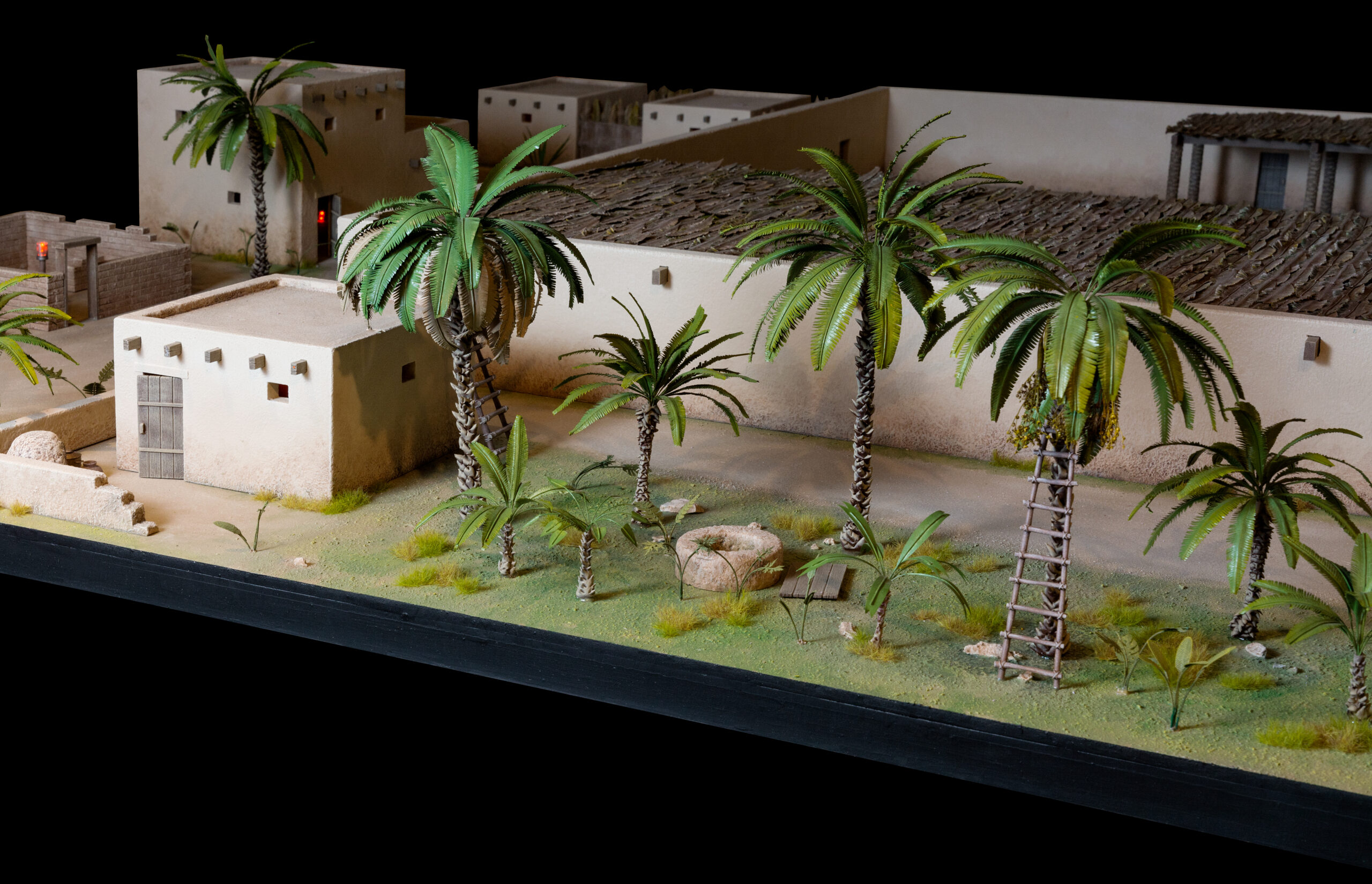
Renowned Chicago-based artist Shawn Michael Warren created the main paintings, deliberately avoiding animate depiction in alignment with Islamic artistic traditions. Beyond the central works, additional sculptures and pieces were thoughtfully created by a collective of artists from interfaith backgrounds, ensuring that diversity was embedded not only in the exhibit’s themes, but also in its making. The exhibition also features models of the Prophet’s Mosque in Medina and the early Kaaba, inviting visitors to engage with history through both visual and tactile experience.
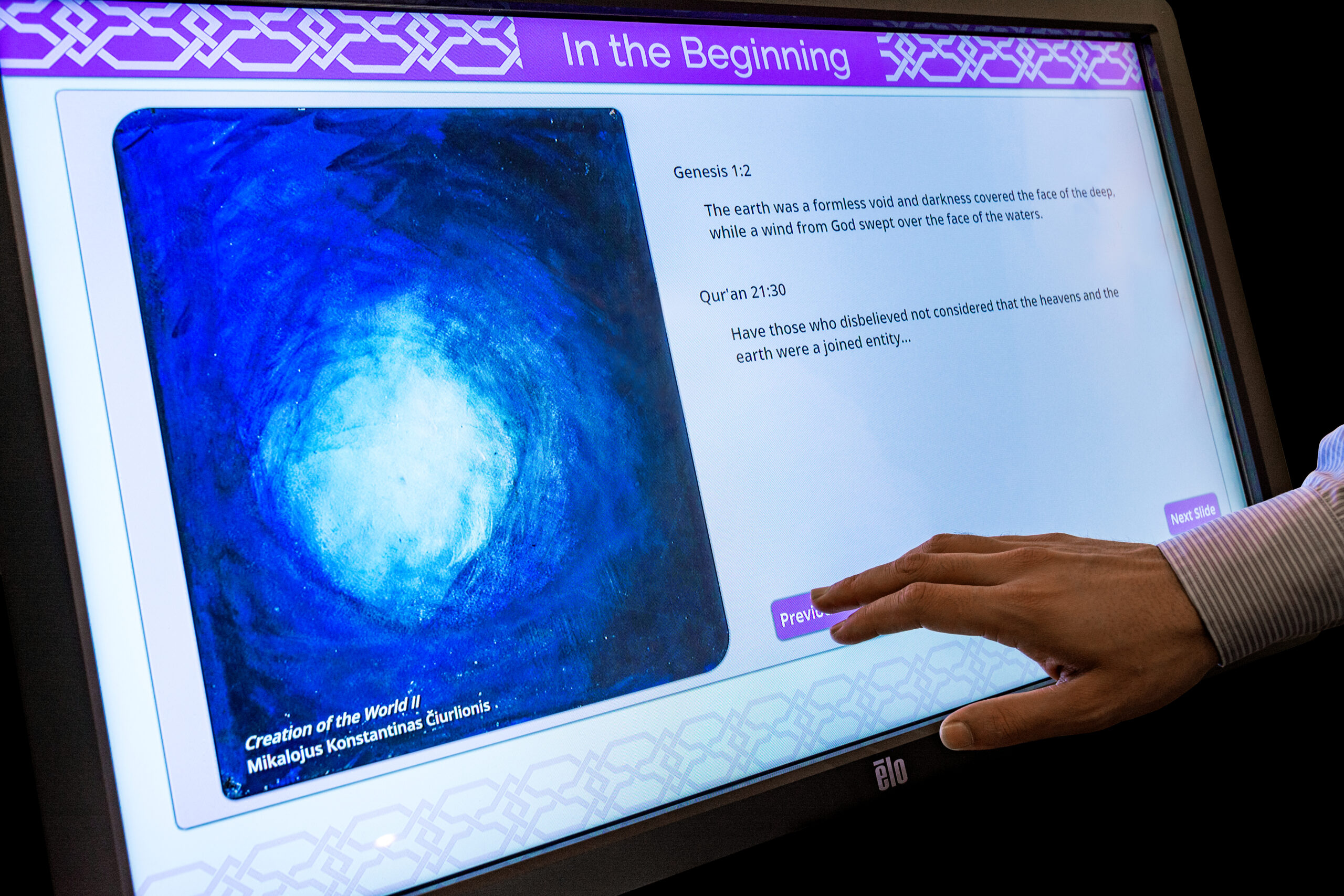
ACCE offers programs such as Islam for Educators, Muslims in the Workplace, Art Making and Resistance, and Islamic Art and Tessellations. It has served institutions including DePaul University, Roosevelt University, and the University of Illinois at Chicago, and is a core partner with Communities in Schools (CIS) Chicago. Through CIS, ACCE brings programming like Muslim Women in STEAM and Islam 101 to K–12 students across the city.
ACCE also plays a leadership role in Chicago’s cultural ecosystem as a board member of the Chicago Cultural Alliance (CCA)—a consortium of more than 40 cultural heritage institutions. As one of the few Muslim-led spaces within this network, ACCE helps shape cultural representation in broader citywide initiatives. With CCA partners, it co-hosts programs such as Suitcase Stories, a storytelling event exploring displacement, memory, and belonging through objects carried across borders.
Case Study: Islamic Geometry in CPS
During a Southside workshop exploring Islamic Art and Tessellations, a second-grade student quietly traced a tessellation pattern on her grid sheet. At the end of class, she asked if she could keep the stencil “because it looks like something in my auntie’s house.” Her teacher later shared that the moment helped her feel unexpectedly connected to the material. It was simple but meaningful—an example of how cultural literacy can affirm identity without spectacle.
ACCE’s approach is grounded in creating access: diasporic art workshops, interfaith dialogue programs, community-designed events, and collaborative exhibitions all serve to expand representation and build cultural competency in the city.
The Sabeel Center for Community Development
The Sabeel Center, located near IFANCA headquarters in Des Plaines, is a community development space that includes a museum dedicated to the life and legacy of Prophet Muhammad (ﷺ). Seven galleries feature exhibitions such as The Noble Names of the Prophet (ﷺ), calligraphic roundels from Masjid an-Nabawi, Hilya Sharif, and miniature paintings of the holy cities of Mecca and Medina. These exhibitions provide accessible educational tools for visitors of all ages and support broader interfaith understanding.
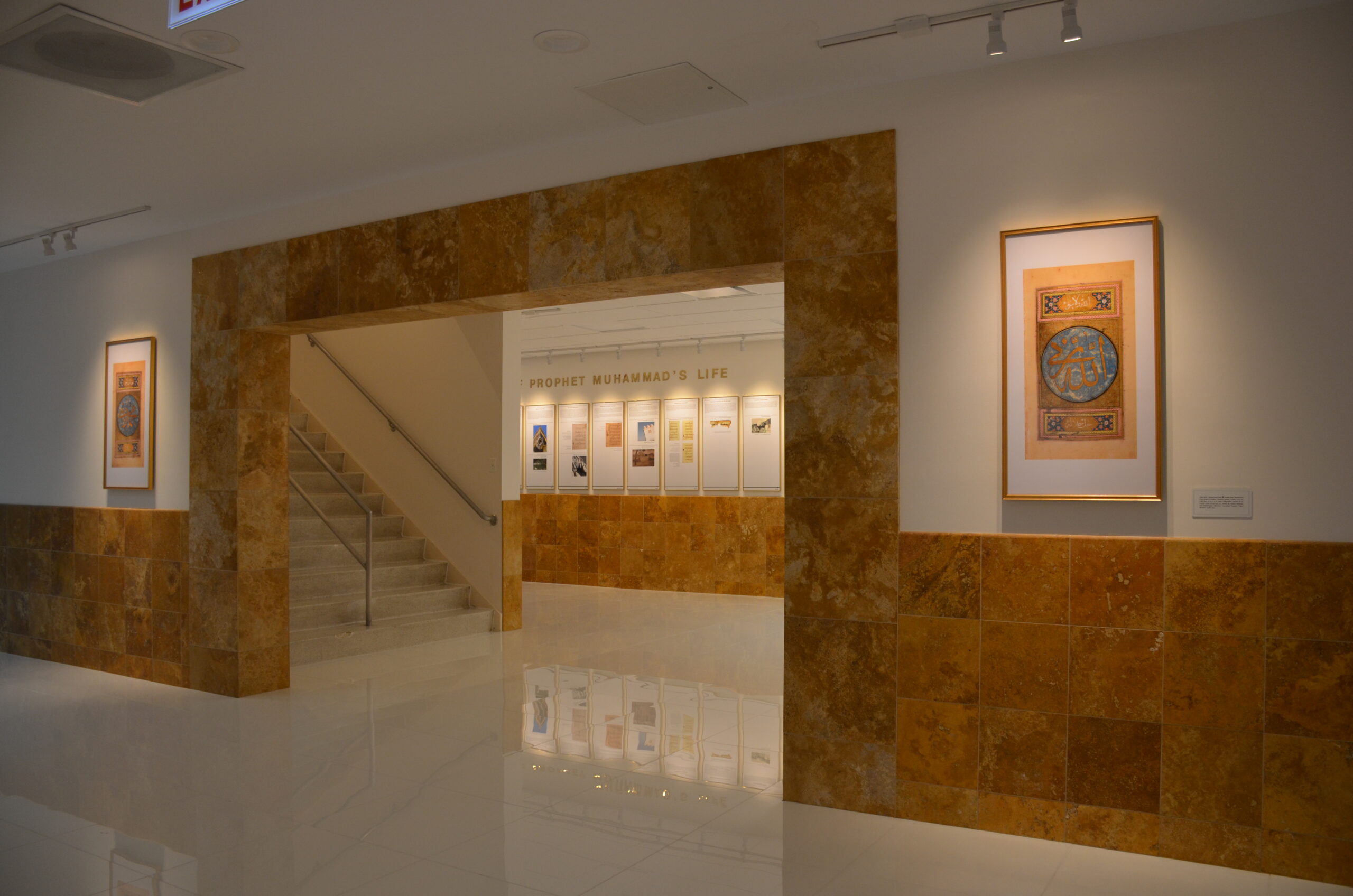 Sabeel hosts major cultural and spiritual events year-round, including annual Mawlid celebrations, the Community Leaders Iftar during Ramadan, intra-faith gatherings during Muharram, and programs featuring Qawwali, Turkish Sufi music, and international reciters. The center remains intentionally open to Muslims across sects and traditions, modeling unity through shared spaces.
Case Study: Senior Quranic Arabic & Wellness
In one of Sabeel’s weekly senior sessions, participants learned basic Quranic Arabic through their native Hindi and Urdu. A retired Pakistani elder shared that understanding even a few key words “made prayer feel new again.” After class, seniors stayed for a wellness session and informal conversation. Sabeel is a space to build out meaningful connections, shared growth, and a sense of belonging.
Sabeel’s Community Support & Educational Programs
Sabeel’s programming includes:
• Monthly mental health workshops for women, blending clinical tools with Quranic guidance
• Senior programs providing social connection, Quranic Arabic, health education, and emotional support
• Sabeel Trips, taking elders to gardens, museums, nature preserves, and cultural sites across the Midwest
• Youth cultural arts programs, including calligraphy workshops led by Haji Noor Deen and local instructors
• School partnerships providing emotional and behavioral support to refugee students from Uzbekistan, Kyrgyzstan, Afghanistan, and Syria and more
• Computer literacy classes for seniors, refugees, and immigrants
The Sabeel Test Kitchen
Sabeel’s test kitchen hosts culinary workshops led by executive chefs specializing in diverse cuisines. Programs teach halal ingredient awareness and nutrition for all ages. Children’s classes help build early understanding of halal dietary choices, especially as they encounter unfamiliar foods in school and social settings.
A Shared Ethos & Emerging Collaboration
While ACCE and Sabeel differ in method—one emphasizing cultural and arts education/literacy, community development and heritage preservation, the other focusing on community development, spiritual learning, and intergenerational support—they share a core purpose: creating accessible, grounded spaces where people can learn, connect, and feel seen.
Both centers were developed humbly from the ground up to address gaps left unfilled by mainstream cultural and social infrastructures. Their programs respond to real needs: educators seeking accurate curriculum, elders looking for connection, students exploring identity, and families navigating cultural and religious life in new environments.
Looking ahead, IFANCA is exploring ways to deepen collaboration between the two initiatives. Cross-site workshops, shared exhibitions, integrated youth programming, and expanded educational resources represent the next chapter of growth. The aim is to create more doors—more ways for communities to access learning, care, and cultural engagement.
Together, ACCE and Sabeel form a growing ecosystem of education, service, and cultural outreach, grounded in the belief that meaningful community work begins with being present, responsive, and rooted in the lived realities of the people they serve.
Briana Mariam Thomas, B.A. in International Political Economy and Curatorial Strategies Certificate, is a Programs Associate at IFANCA, a certified mediator, and Board Director at the Chicago Cultural Alliance. Her work bridges curatorial practice, cultural programming, and community development, focusing on oral history, exhibitions, and public programs that foster cultural memory, interfaith dialogue, and community authorship.