
A Seat at the Table: Advocating for Halal Food and Muslim Student Needs on Campus
Asiyah Arastu
Article
March 31, 2026
Asiyah Arastu
Evolution of Halal Dining
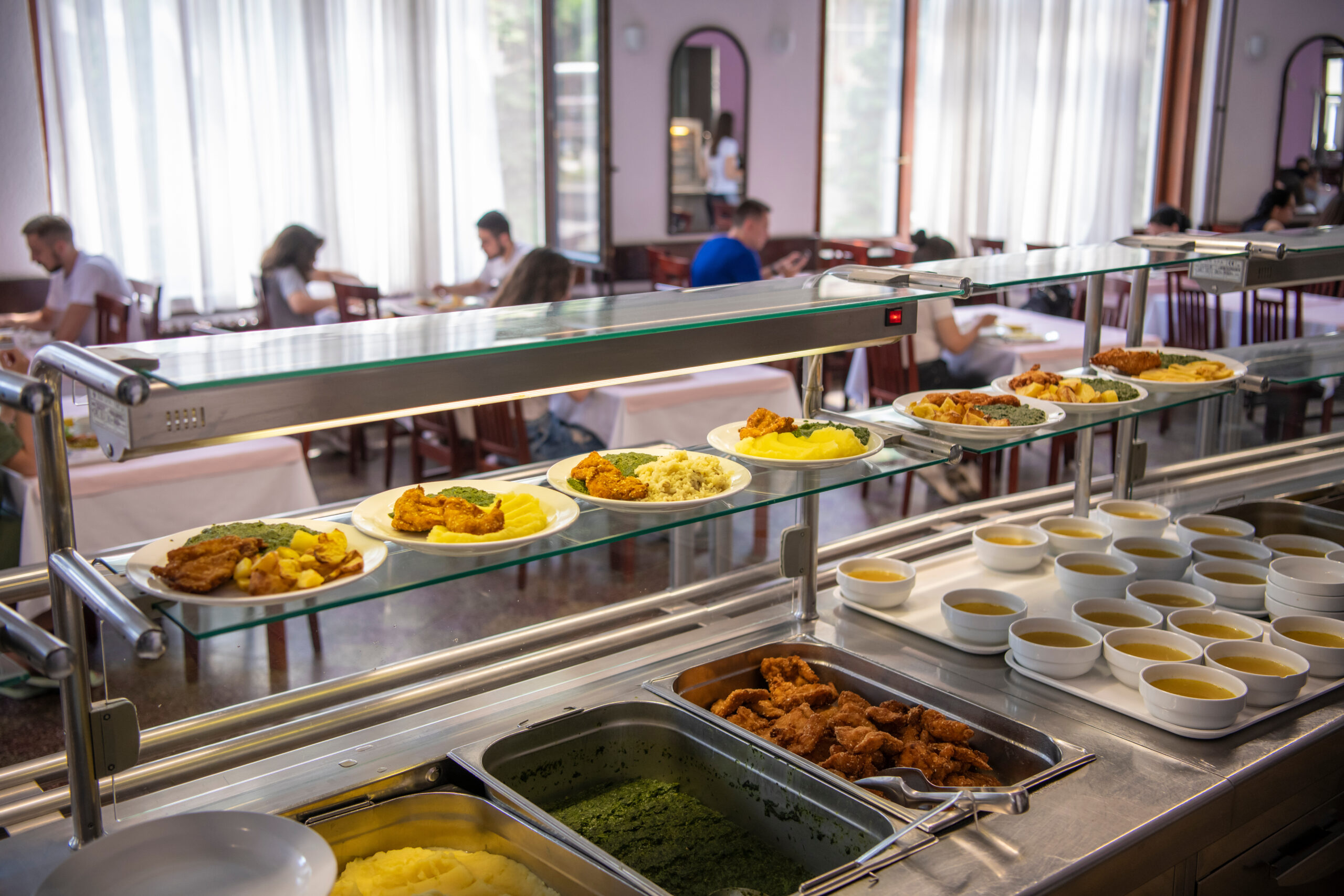
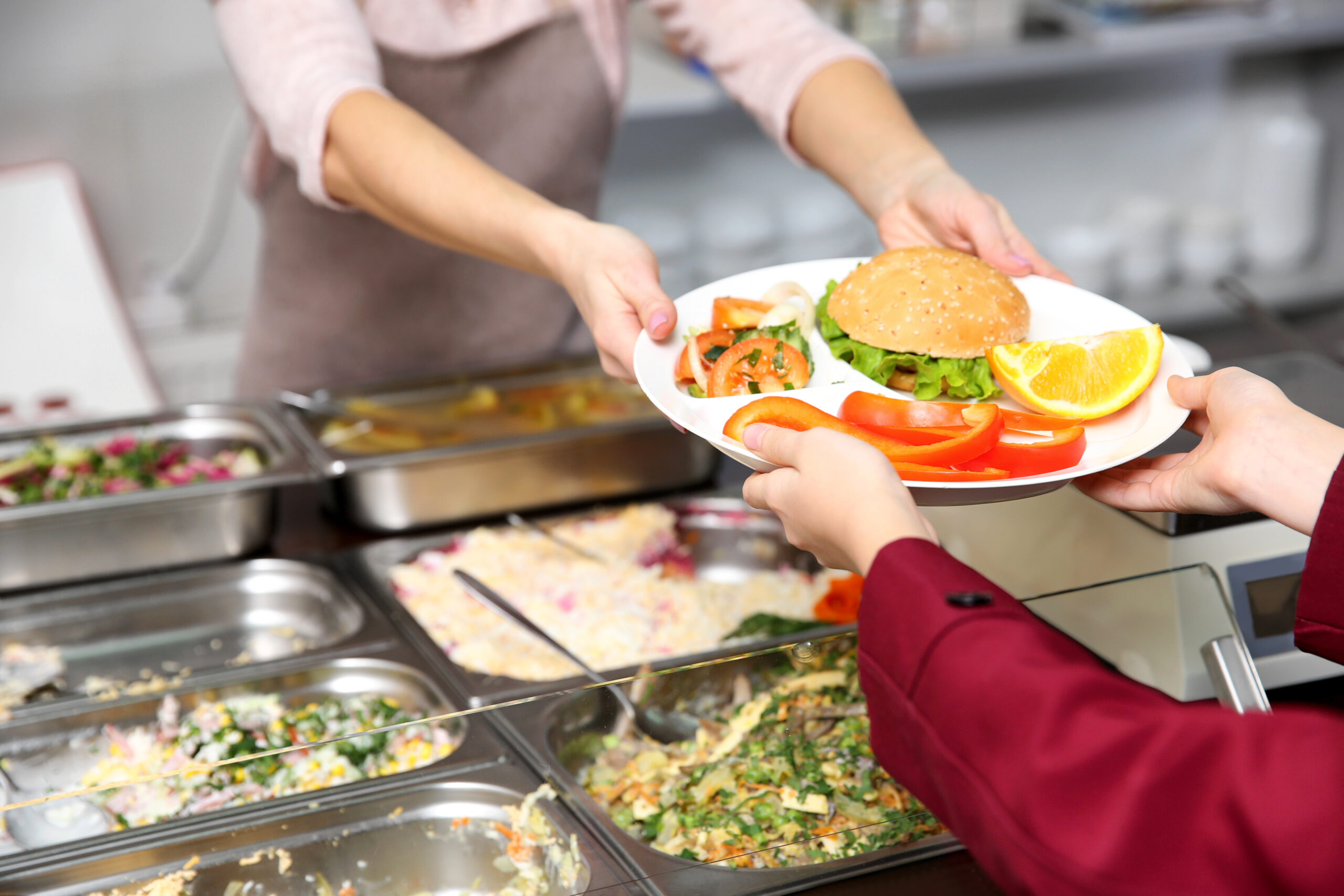
When I swiped into Northwestern University’s Allison Dining Hall as a freshman in the fall of 2021, I was wary of the menu items that were labeled as “halal” with a big red sticker. Since I had no way to verify that those items were indeed halal, I steered clear of all meat that fall quarter and ate like a vegetarian. Along with salads and soups, pizza and grilled cheese, I ate vegetables of all kinds: overcooked, undercooked, overseasoned, underseasoned, stir-fried, blanched, boiled, braised, steamed, charbroiled, casseroled, and so on.
That October, I joined a zoom meeting held by Northwestern Dining for Muslim students to share their concerns about halal options. I learned then that the beef and chicken served at all dining halls was halal by default, apart from certain processed, breaded, or pre-packaged meats (like burgers or fried chicken patties). After that meeting, Northwestern Dining forwarded the halal certificates from their meat vendors to all students on the call.
With this knowledge, I became comfortable eating halal meat at the dining halls. At the same time, I remained cautious, since it soon became clear that this system was far from perfect. Pork entrees were served alongside beef entrees, which posed the risk of cross-contamination. Pork stir-fry was made on the same grill as vegetarian or chicken stir-fry. Entrees with non-halal sausage or bacon were mistakenly being labeled with the bright red “halal” sign. If you looked closely at the ingredients for some entrees, which tended to be the most enticing pasta dishes, you could see “cooking wine.”
With the guidance of then associate chaplain Tahera Ahmed, a cohort of students, including myself, started to meet regularly with Northwestern’s dining program administration to resolve these concerns. This relationship evolved further as we began to work even more closely to ensure a smooth dining experience during Ramadan in both 2024 and 2025.
Slowly, we began to see improvements. As recipes were rewritten to eliminate all forms of cooking alcohol, “no wine” replaced “cooking wine” on ingredient cards. However, mislabeling persisted as an issue. It was too easy for the bright red movable halal labels to be mistakenly placed on entrees containing pork, and students reported being told conflicting messages from staff who weren’t too familiar with halal standards.
During our ongoing conversations, one of the solutions we discussed was the implementation of more extensive employee training on what halal standards entail. By the end of the 2024-25 school year, we decided that the best way to reduce human error was to create at least one halal-certified dining station similar to the kosher-certified stations that currently operate at Allison Dining Hall and Elder Dining Hall. IFANCA is in charge of conducting the final inspection of Northwestern’s new halal dining station as their third-party certifier.
IFANCA-certified campus dining programs are “total compliance” programs, ensuring that the dietary needs of halal observing students are met. This includes the review of all ingredients (not just meat), as well as production, supply chain, and storage practices.
The goal is to build confidence in our client dining programs by maintaining their integrity. After all,
..if freshmen and sophomores are mandated to purchase a meal plan, they should be paying for food they can actually eat.
Despite its flaws, the robustness of the halal dining program at Northwestern is a blessing that many campuses across the country do not share. A current junior at a university in New Jersey described the limited halal items offered by the school:
“When I was a freshman, there were not many halal dining options covered with the meal plan. During sophomore year, they started serving halal grilled chicken in all of the dining halls. Now, as a junior, some places even offer halal chicken tenders, turkey, and more.”
This contrasts with Northwestern where halal options are usually served as main entrees rather than as items that can be ordered on the side.
In universities that serve a larger population of Muslim students, the availability of halal options improves significantly. Ruqaya, a current junior at the University of Houston, said that the school “has made halal food accessible at every food location on campus. There are at least 4 on-campus restaurants that have halal menu items, or even an entirely halal menu. The variety of halal food ranges from hot chicken to burgers to sub sandwiches to grilled cheese. Also, the religion center provides free lunch every Wednesday and many times they cater from halal restaurants in the Houston area which is great too!”
All the Earth is a Place of Prostration
Physical nourishment satisfies only part of a Muslim college student’s daily needs. Having access to designated prayer rooms, meditation rooms, or multi-faith spaces facilitates a student’s spiritual connection with his or her Creator. Not only must prayer rooms be present; they must also be accessible, and there should ideally be multiple prayer rooms distributed across campus so that students in any building can pray in between classes, labs, and extracurriculars. As one student said:
“Balancing a prayer schedule with classes and exams requires planning and flexibility. I set alarms on my phone and use a prayer app to help me stay on track. During busy periods, such as exams, I pray in a quiet corner of the library or a designated prayer space on campus.”
At Northwestern, the third floor of the Multicultural Center (commonly referred to as the MCC) contains a designated Muslim musalla along with several other rooms where Muslim students often congregate and hang out. Another central campus location, Norris Student Center, has a musalla in the basement that was recently renovated. It even has a wudhu station. Parkes Hall, which is adjacent to Alice Millar Chapel and is home to Religious and Spiritual Services has a designated “Muslim Prayer Room” on the ground floor along with a non-denominational Multi-faith room on the second floor. Smaller multi-faith spaces are scattered across campus, including in the Tech Building, where many STEM majors live most of their college life, and Shepard Residential Hall.
During my time as a student, one of these locations was usually accessible to me no matter where I was on campus, though, granted, as a non-STEM major, I spent little time in Tech or north of Tech. My daily schedule usually revolved around the central and south parts of campus, closer to the MCC, Norris, and Parkes Hall. However, especially during busier times of the quarter or when I had classes back-to-back, I was content with finding a quiet corner in any building to pray instead of making a special trip to a designated prayer area. I simply found it more convenient to claim a study carrel, computer lab cubby, stairwell, or empty classroom as my temporary musalla. I was comfortable taking the risk of being walked in on, which happened more than once. This was a personal choice I made: the resources and spaces were present, but I grew up as part of a family where we prayed everywhere and anywhere when it was prayer time, so privacy isn’t a huge consideration for me when I need a place to pray.
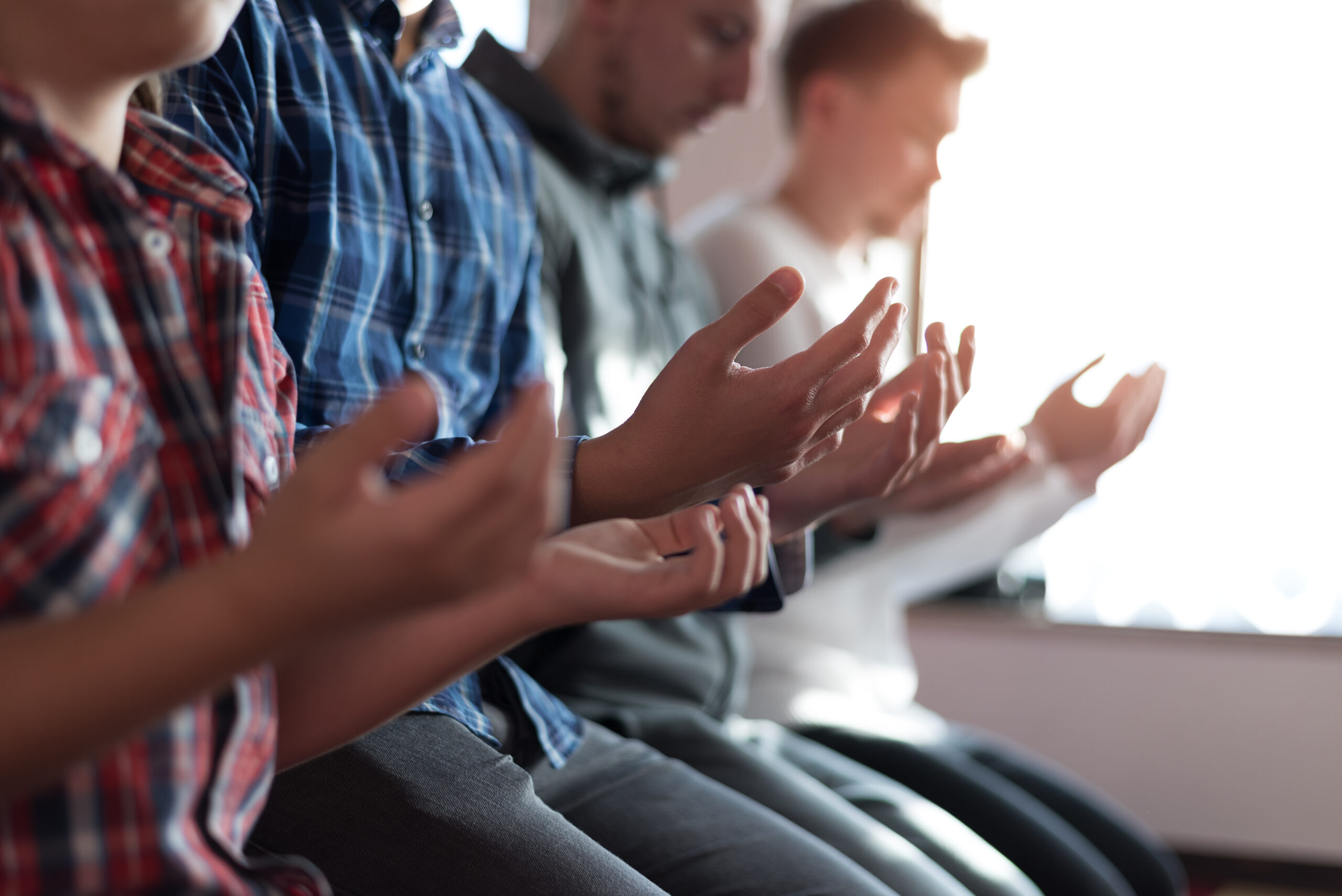
Nevertheless, as an institution, it is necessary to provide a variety of accessible, private, and safe prayer spaces so that all students have a comfortable environment in which they can fulfill their spiritual needs. If such spaces aren’t available, then students, being the resourceful young people that they are, will probably carve out space for themselves. Ruqaya, a junior at the University of Houston described the making of “Masjid al-Basement,” which is exactly what it sounds like:
“Over the years, students started congregating in the library basement where there’s lots of space for prayer, sinks for wudhu, and enough privacy and peace to focus on prayer. Now, the library basement is known as “Masjid al-Basement” (no joke) and everyone goes there to pray. I love going there because I always see someone I know and it’s a great opportunity to pray together, catch up, and even meet new Muslim friends. Sometimes the MSA organizes jama’ah salah too. At a given time you can find over 50 people praying there. I’m not sure if there are other designated prayer spaces around campus but Masjid al-Basement is the main one.”
One of the strengths of Masjid al-Basement is that Muslim students, regardless of their sect, feel welcome there. However, unlike a designated prayer room that can be properly furnished and maintained, Masjid al-Basement is an improvised space, and students have no way to keep basic prayer materials there long-term.
Temporary or improvised spaces, while they can become beloved gathering places, do not absolve universities of the responsibility to create permanent spaces of worship and gathering for their students.
Looking Forward
As Muslim populations continue to grow and flourish on college campuses, the next challenge is to create Muslim Life spaces that can accommodate large programs, including Ramadan iftars, Friday and Eid prayers, and speaker events.
In order to get there, Muslim students need to step up as leaders and advocates and find ways to tap into the resources of both universities themselves and Muslim parent and alumni communities. Many other faith groups excel at fundraising among themselves, which means they are less dependent on university administration to meet the needs of their student populations. Perhaps this is a model for Muslim students to explore as well, especially amid the pressure that higher education institutions are under today in terms of federal funding cuts and restrictions on promoting identity-based organizations, programs, or student groups (now often rebranded as “diversity, equity, and inclusion” initiatives).
Not only are universities limited in the kind of support they can provide, but certain institutions have also made it clear that their priorities are at odds with what Muslim students want. Student leaders will need to navigate a complex landscape to maximize the resources they can get from universities without compromising their values, and urging the broader Muslim community to fill in the gaps where university administrations/efforts/initiatives fall short.
That is a daunting task, so where can students start? This is one junior’s advice to fellow Muslims as they navigate college campuses:
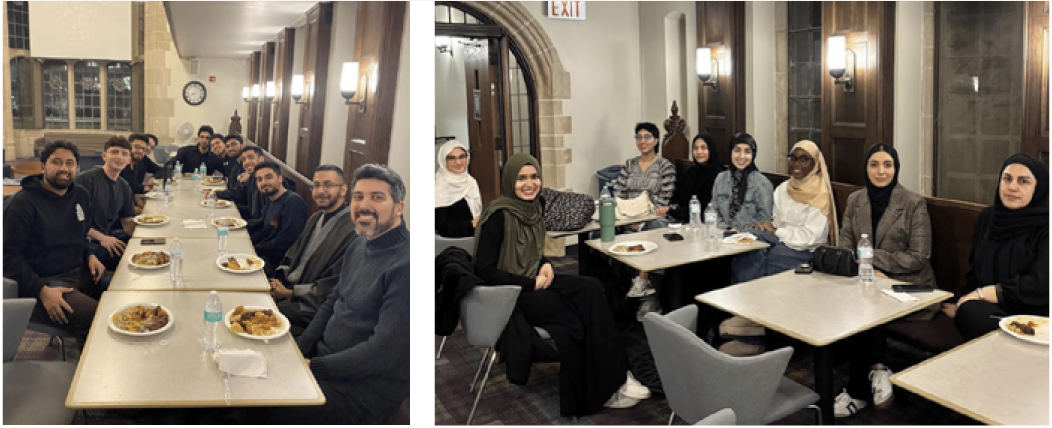
“Connect with Muslim organizations on campus early on, such as the Muslim Student Association (MSA) or any faith-based groups. These communities can offer support, friendship, and helpful information about prayer spaces, halal food options, and campus events.
 Don’t hesitate to reach out to faculty or staff if you need accommodations for prayer or fasting; they’re often willing to help if you communicate your needs clearly. It’s also important to manage your time well, especially during busy periods like exams or Ramadan, so you can balance your academic and religious commitments. Finally, remember to be open to meeting people from diverse backgrounds. College is a great place to learn from others and share your own experiences.”
Once you know what your school offers, you’re in a better position to identify what it is missing—whether that’s in terms of halal food options, prayer and gathering spaces, or something more expansive. Then, as a community, you can do something about it.
Asiyah Arastu has a bachelor’s degree in Creative Writing and Middle East and African Studies from Northwestern University. Her work has appeared in Helicon, North by Northwestern, and The Oakland Art Review. Asiyah lives with her family in Elgin, IL where she is currently working on a novella inspired by her first backpacking trip.